Take everything you have learned about your existing landscape and your goals for a functional design appealing to both humans and wildlife and develop a plan that also solves problems, e.g., improving drainage, extending entertaining space into the garden, and providing a better habitat for wildlife.
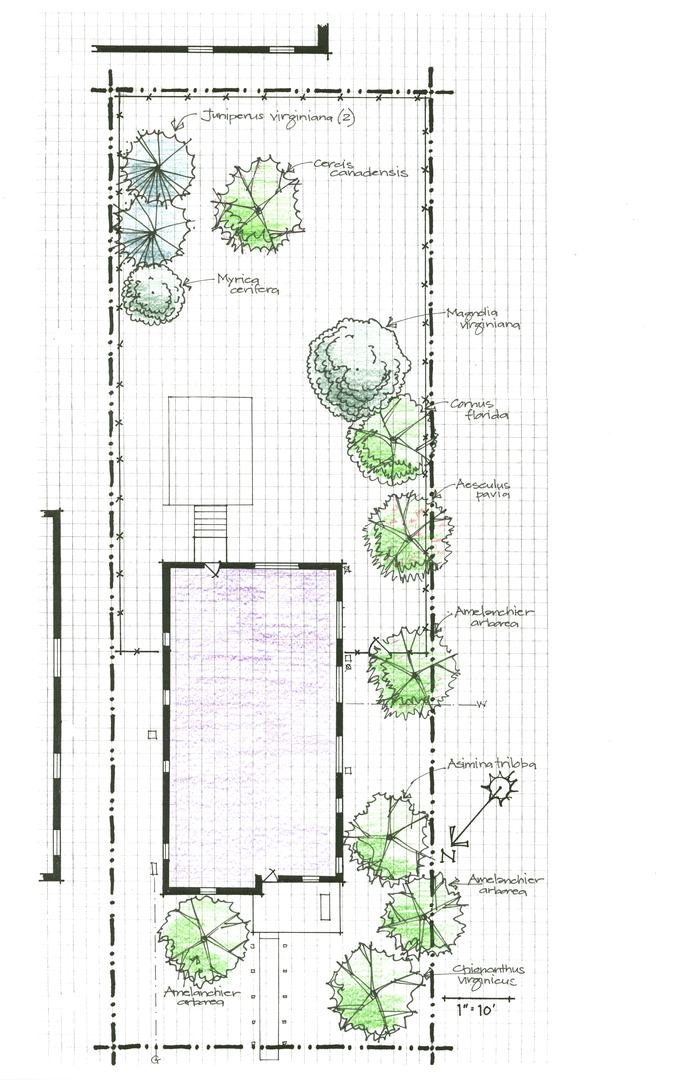
Canopy Layer Design by Patricia Lindsay
Develop a Planting Plan
- Plant in groups of at least 3-5 of the same species to increase foraging efficiency
- Create a variety of habitats by including plants of varying heights, from groundcovers to trees
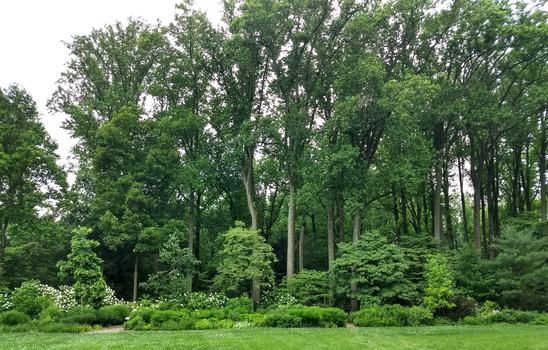
Image by Charlotte Glen, CC BY-SA 4.0
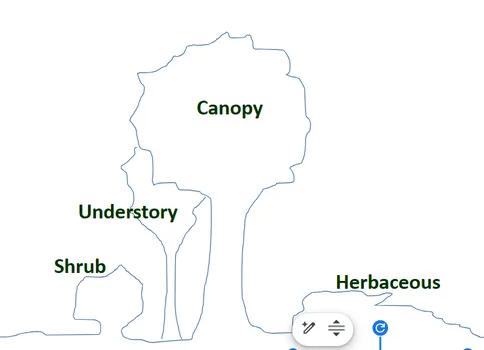
Illustration by Charlotte Glen CC BY-SA, 4.0
Develop a Plant List Providing Year-Round Interest
Why Native Plants
(plants that, without human intervention, co-evolved with native wildlife to form interdependent, specialized relationships)
- Attract a diversity of wildlife
- Provide food and cover for native wildlife
- Well suited for the local soils & climate
- Require minimal upkeep when matched to site conditions
Select the Right Plant for the Site
- Use the Extension Gardener Plant Toolbox to select plants that are adapted to the planting site (sun, space, climate, etc.)
Plan for Year-Round Food and Shelter
- Plan to have something in bloom throughout the growing season
- Include plants that provide fruits or seeds throughout the year
- Include evergreens for winter protection
Principles of Gardening with Native Plants
Continue to Step 6: Install and Maintain