Wildlife Needs
Landscaping for Wildlife with Native Plants
Basic Needs
All wildlife needs food, water, and cover.
- Food — Wildlife eat insects and spiders, leaves, acorns and other nuts, seeds, fruits, and nectar. Choices vary by wildlife type, life stage, and season.
- Water – Wildlife require water year-round and obtain it from a variety of natural and man-made sources.
- Cover – Animals need cover to nest, rest, hide from predators, and avoid harsh weather.
Limiting Factor
The least available component, the "limiting factor", determines the number of animals that can occur in an area. For example, a lack of dense vegetation for nesting and hiding from predators may limit the number of songbirds in a backyard, even if it has numerous feeders and a birdbath. Identify the limiting factor in your landscape, and compensate for it before addressing other habitat components. This could mean adding plants that provide cover or including a birdbath in your design.
Seasonality
Birds and other wildlife's habitat needs change with the seasons. From early April to mid-May, buntings, cuckoos, flycatchers, orioles, tanagers, thrushes, vireos, and warblers migrate north from Latin America to their breeding grounds in the United States. After nesting, these neotropical migrants fly south in September and October to avoid food shortages and dropping temperatures. Migrating birds favor dense vegetation because it protects them from predators.
Birds that live in North Carolina year-round, like bluebirds, northern cardinals, and chickadees, spend the winter here with other species that migrate south from northern breeding areas. During cold nights and winter storms, these birds and other wildlife reside in evergreen vegetation, including hollies, wax myrtle, eastern redcedar, or pines. Include a variety of native plant species in your landscape to ensure year-round food and cover.
Specific Needs
Careful planning is required to meet each desired wildlife species' habitat requirements. Use this form to document the specific needs of each wildlife species you want to attract.
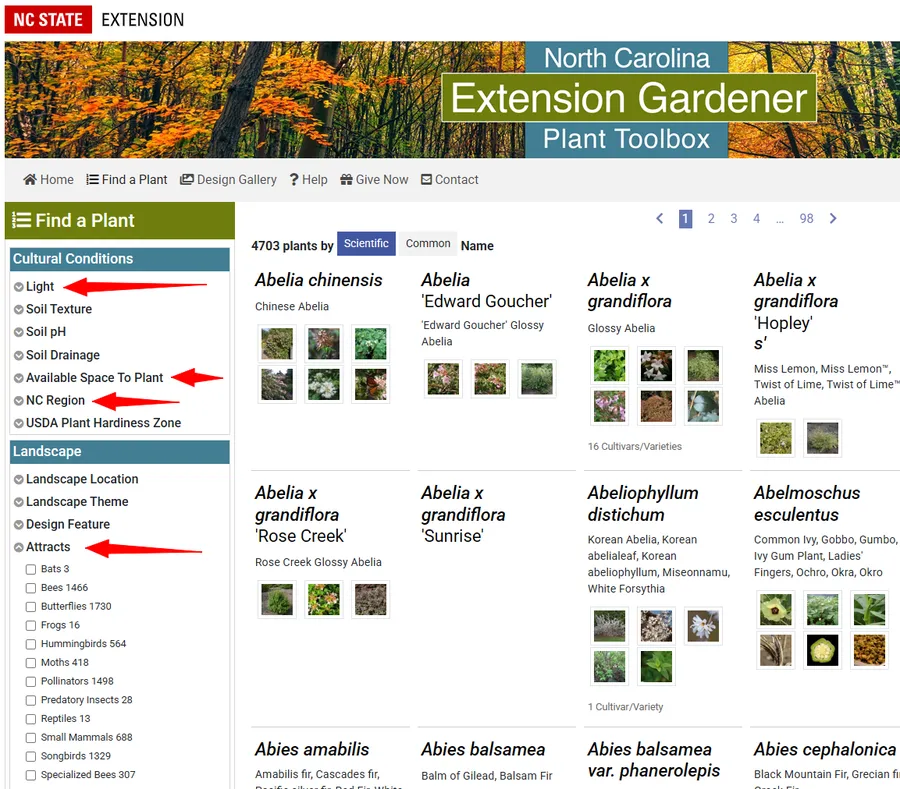
The Extension Gardener Plant Toolbox can help you select plants to attract specific types of wildlife. First, identify what you can offer plants (sunlight, space, climate). Then identify the type of wildlife you would like to attract. Each box you check narrows the pool of plants, as only plants that meet all criteria are included. TIP: If you have limited space, select multiple options to attract a variety of wildlife species.
Bees - Plants to Attract Native Bees and Other Pollinators
Ninety percent of bee species are solitary, with each mother bee deciding where to lay her eggs. Seventy-five percent of North Carolina native bees dig nest tunnels in the ground, and the remaining species nest in wood, hollow stems, or other cavities. Bee habitat must include both floral resources and nesting resources.
Food – Nectar is the primary food of adult bees, and most are not picky about the source; however, their options may be limited by their body size and tongue length. Pollen is the primary protein source for bee larvae, young adults, and egg-laying females. Some species feed on many types of pollen; others focus on a few closely related plant species.
Cover – Ground-nesting bee species vary in their preferences for mulch depth, soil texture (sand, silt, or clay), moisture, and sun exposure. Manage your garden to support stem nesting bees.
Birds - Plants to Attract Songbirds
Food – In the spring, migrating birds feed on insects found on the leaves of oak, black cherry, yellow poplar, black willow, and other deciduous trees. Later in the year, adult birds feed their nestlings insects and spiders, which provide the protein and calcium important for bone and tissue growth. Some birds, including thrashers and thrushes, seek out fruits in the late summer and fall. Sparrows, juncos, and many other birds present in the winter eat seeds.
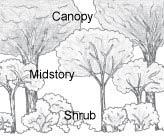
Cover — Songbirds feed, nest, and rest in different types of vegetation. Because they can fly, birds can segregate themselves vertically within a landscape. Low-growing plants beneath the tree canopy provide vertical vegetation, allowing shrub-dwelling birds like northern cardinals to live directly below treetop birds like red-eyed vireos.
Birds - Plants to Attract Hummingbirds
Food — Hummingbirds' habitat requirements differ from those of other birds. Ruby-throated hummingbirds, the only species that breeds in North Carolina, feed on small insects and nectar from bright, tubular flowers.
Cover – Ruby-throated hummingbirds prefer dense undergrowth and vine tangles for feeding and cover. They commonly occur in gardens and along woodland edges.
Butterflies - Plants to Attract Butterflies and Moths
The beautiful natural landscape of the southeastern United States supports hundreds of butterfly species. More than 160 butterfly species occur in North Carolina. Some species are found statewide, while others are restricted to a specific habitat or region.
Food – The types of plants (and parts of plants) that butterflies eat as caterpillars vary widely from what they eat as adults. A typical butterfly's life begins as an egg laid on a host plant leaf. When it hatches, it feeds on the host plant's leaves. Each butterfly species has unique food requirements that limit it to specific host plants. For example, the spicebush swallowtail uses the spicebush as its host plant. Adult butterflies feed on nectar from a variety of flowers.
Cover – Many caterpillars are camouflaged to resemble leaves or bird droppings, helping them blend in with their host plant's foliage. Butterflies use plant foliage, downed wood, and standing dead trees for cover year-round. On hot summer afternoons, they may seek shade. Some butterfly adults hide in tree cavities or other tight spots during the winter.
Mammals - Plants to Attract Small Mammals
Chipmunks, squirrels, rabbits, raccoons, and other small mammals can be delightful garden visitors. See these specific strategic landscape management practices to attract, support, and sustain various types of wildlife.
Reptiles and Amphibians- Plants to Attract Frogs and Reptiles
Food — Many tadpoles eat mostly plants and aquatic larvae (like mosquito larvae). Adult amphibians typically eat insects and other small invertebrates. Some larger species eat small vertebrates, including fish, other amphibians, and small birds.
Cover — Amphibians need access to pools, ponds, streams, seeps with surface water, or marshes to lay eggs and, for some, to live as adults. They also need access to dry land for adult life, breeding, and movement between aquatic environments. Many rely on damp, rotting logs and stump holes for predator and weather protection and to keep their skin moist.
Keep Records for a Year
Before you begin habitat improvements, observe how your landscape changes throughout the seasons.
Photograph Your Landscape
Take photos of different areas of your yard in each season. As you develop a final plan, these photos will help you remember how the yard looked at various times of the year.
Make Wildlife Observations
Keep records of the wildlife using your landscape, noting which areas they use and when. Animals are predictable and will usually appear in your landscape at the same time each day and season each year. Use binoculars to identify the animals in your yard and record detailed observations. Use these records to identify which areas of the landscape are performing well and which areas need habitat improvement. They can also guide your management choices, such as when to clean out nest boxes, where to erect feeders, and when to prune plants.
Investigate Wildlife Habitat Value
Observe how wildlife uses the existing native plants. Retain as much existing native vegetation as possible as you begin creating your native plant landscape.
The following web links and field guides can help you identify the wildlife in your landscape
Birds
- Cornell Lab of Ornithology
- Patuxent Wildlife Research Center
- Birds of the Carolinas. By Eloise Potter, James Parnell, and Robert Teulings. The University of North Carolina Press.
- The Sibley Field Guide to Birds of Eastern North America. By David Allen Sibley. Alfred A. Knopf, Inc.
- National Geographic Field Guide to Birds of North America. National Geographic Society. Mel Baughman (Editor)
- Eastern Birds. By Roger Tory Peterson. Peterson Field Guide Series.
- The Birder’s Handbook: A Field Guide to the Natural History of North American Birds. By Paul Ehrlich, David S. Dobkin, and Darryl Wheye. Simon and Schuster, Inc.
Butterflies
- Butterflies and Moths of North America
- Jeff's Butterfly Page
- A Field Guide to Eastern Butterflies. By Paul Opler and Vichai Malikul. Peterson Field Guide Series.
- Butterflies through Binoculars: The East. By Jeffrey Glassberg. Oxford University Press.
Caterpillars
- Caterpillars in the Field and Garden: A Field Guide to the Butterfly Caterpillars of North America. Oxford University Press.
Continue to Step 5: Design