Forest Lost to Urban Development
The human population in North Carolina continues to escalate rapidly. In 2022, there were 10.7 million people.
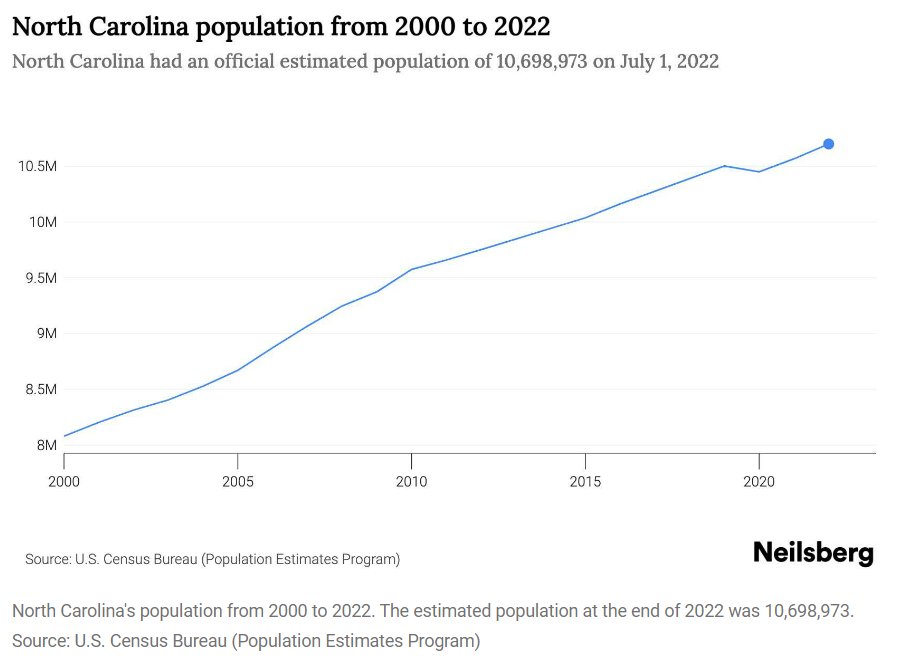
neilsberg.com/insights/north-carolina-population-by-year
This increase in population is causing a drastic loss in wildlife habitat across the region.
As land is converted from forest to urban use, it becomes unsuitable for many specialized wildlife species, especially animals that require large tracts of unbroken forest. Pileated woodpecker, black-and-white warbler, scarlet tanager, and wood thrush are examples of species that disappear as areas are built up. Other species, including white-tailed deer, raccoon, and gray squirrel, adapt well to the land changes. Even some birds like house finches, American robins, and northern cardinals are common in developed habitats. These adaptable species are able to make use of various food and cover sources available in cities.
Cleared Forest Replaced with Non-Native Plants
Areas cleared of forest to make room for buildings and neighborhoods are replanted with a very limited variety of plants, most of which are non-native, making them poor-quality habitats. Bird and butterfly species that require habitats containing a variety of native plants cannot sustain their populations in these typical landscapes.
Remaining Forest is Degraded and Fragmented
Small patches of forest or native plant habitats left as parks after an area is urbanized are often along streams or on steep slopes that couldn’t be developed. These isolated patches of forest will not sustain populations of many wildlife species. Over time, many factors contribute to the degradation of the remnant habitats. Invasive plants creep into the forest from all sides, human users and their pets compact soil and disturb wildlife, and natural forces such as wildfire are not allowed to run their course. Additionally, the populations of animals present in the patches are at risk of local extinction because they are isolated from other breeding populations. Individual animals that attempt to move from one patch to another are often run over by cars or eaten by cats or other predators.
Every Little Bit Helps
Each individual home or property owner can help conserve wildlife habitat in urban areas by landscaping with native plants following proper design principles. When a neighborhood takes action over a large area, it can connect small blocks of habitat and allow animals to move more easily across an urbanized region.
Additional information is available in the Southern Forest Resource Assessment.