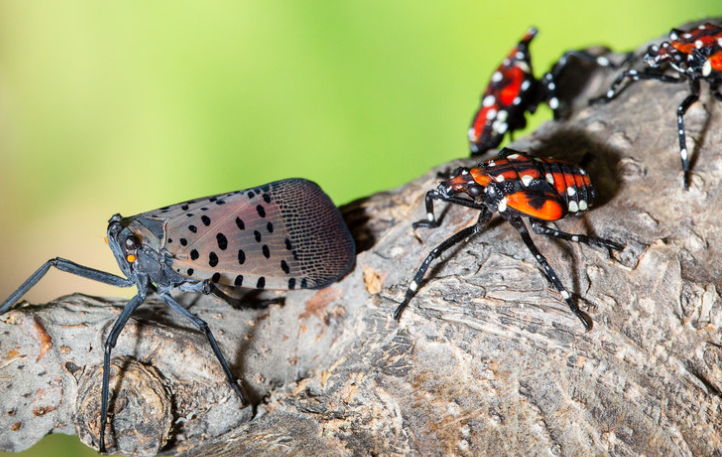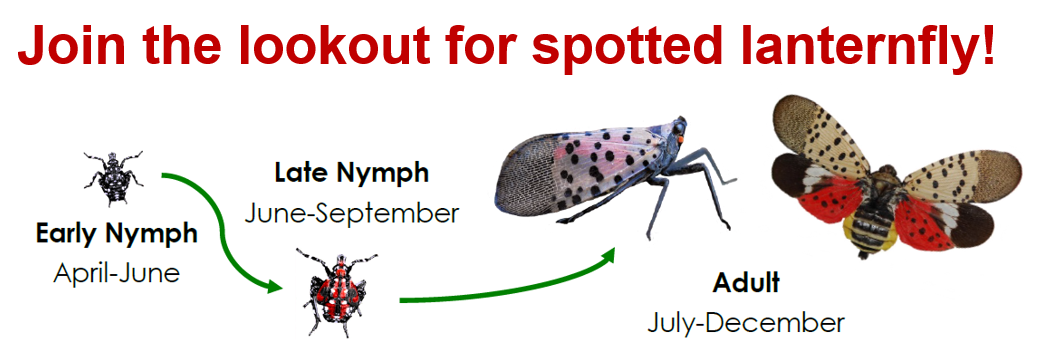
Image source: NCDA & CS
If You Think You Have Found Spotted Lanternfly in NC:
Please take a photo. Report suspected spotted lanternfly to the experts at the North Carolina Department of Agriculture and Consumer Services (NCDA&CS)- When reporting your sighting, you will be asked the location of the sighting, the date, number of insects present, and for your contact information.
- Clear, close-up, focused images are the easiest to ID! If possible, add a coin, paper clip, or other small objects to the photo to indicate the size of the insect.
Learn More About Spotted Lanternfly:
- NC State Spotted Lanternfly Fact Sheet
- More resources from NC State Extension
- More resources from NCDA&CS
- PennState Extension Spotted Lanternfly website
- USDA National Invasive Species Information Center
- Stop Spotted Lanternfly
Additional Steps You Can Take Include:
- Become familiar with Tree of Heaven (Ailanthus altissima), the preferred host plant for spotted lanternfly. Note the location of trees in your area and check them regularly in the summer for immature insects (May-September), adults (July-December), and egg masses (October-June).
- Check your vehicle for egg masses/juvenile or adult insects if traveling through infested areas. As an extra measure, take vehicles through the car wash before returning to NC.
- If you own a vineyard or orchard, NCDA&CS recommends you remove all Tree of Heaven on your property as a preventative measure against this pest.
- Get the word out. Talk to people and businesses in your community. Make them aware of this potential pest and what to look for.