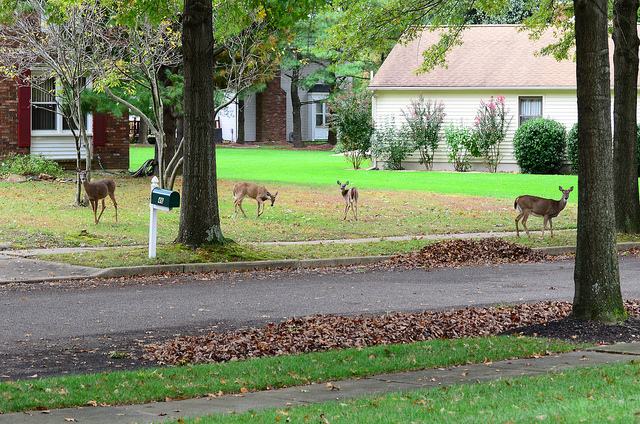
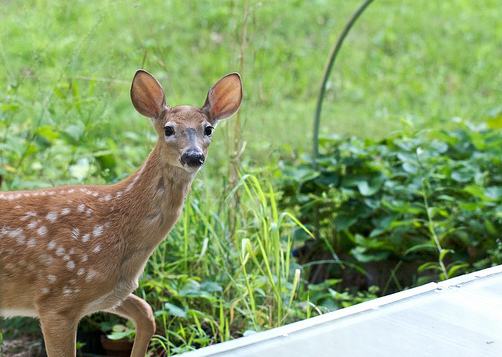
White-tailed deer have become a pest even in urban areas. They eat trees, shrubs, vegetables, and other landscape plants grazing on the seedlings, tips, buds, branches, and foliage. Deer are vegetarians and are frequently found near forest edges. The severity of the damage varies with the deer population and the availability of other food.
Identification
- NC Extension Gardener Handbook: Integrated Pest Management Strategies to Minimize Deer Damage in the Landscape
- Slide deck on minimizing deer damage
Identification
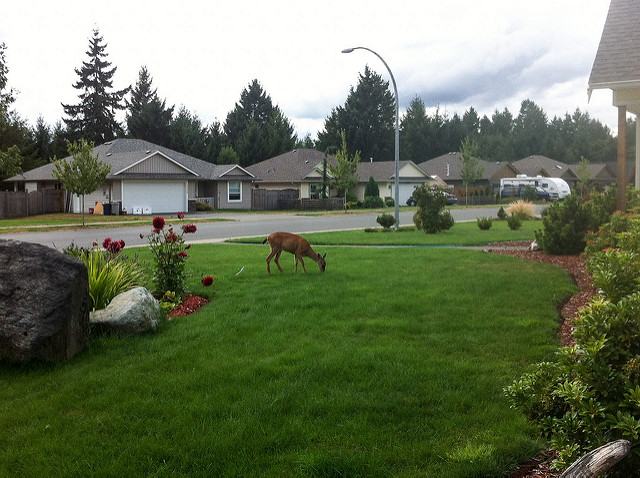
- Scout for deer at dawn, dusk, and nighttime when they are feeding.
- The split, sharp hooves of deer also leave distinctive footprints
- Vegetation damaged by deer has a jagged edge
Cultural Management
- Plant Selection: While no plant is completely deer-proof, there are many plants deer prefer not to eat if other options are available.Plants with sticky or hairy leaves and stems and foliage with a lemony or minty fragrance are less attractive to deer. Place these as garden borders to deter deer.
- Search the NC State Extension Gardener Plant Toolbox for deer-resistant plants recommended for NC landscapes. (use the column on the left to narrow the selection by selecting your region, amount of sunlight, space available, etc.)
- Deer resistant plants factsheet
Mechanical Management
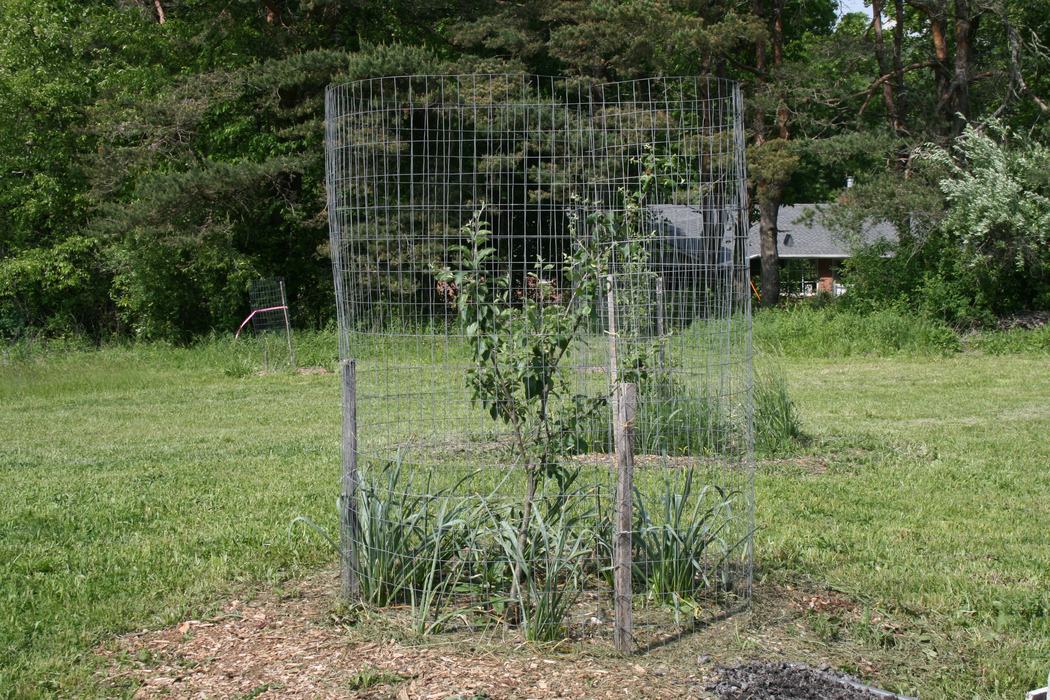
- Barriers: Install plastic or woven-wire cylinders around trees and shrubs to fence deer out.
- Fencing:
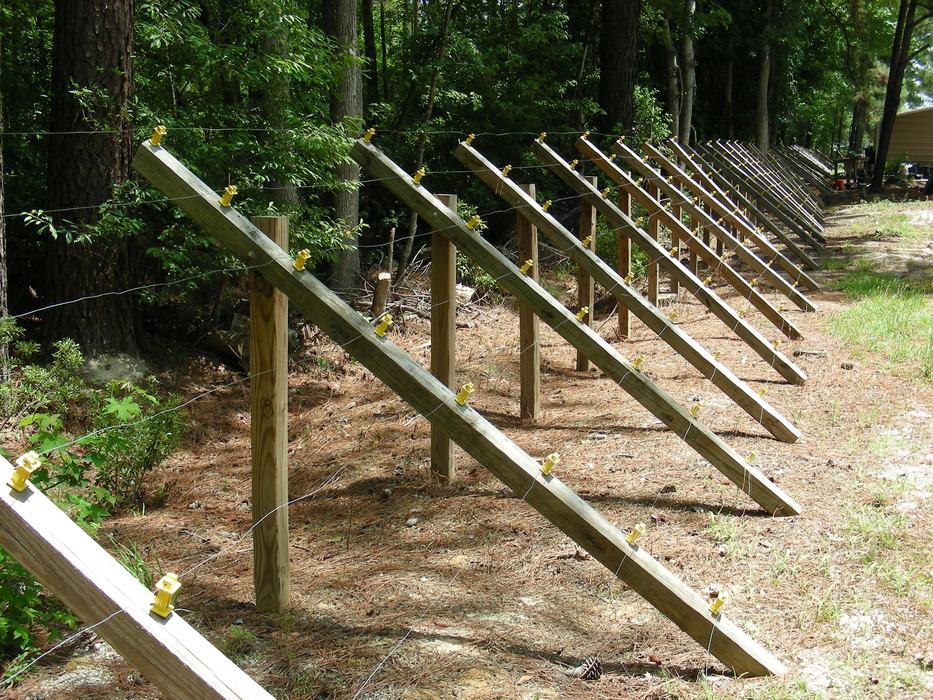
- Install a high-tensile electric fence. North Carolina Wildlife Resources Commission provides detailed instructions.
- Managing Deer Problems in Residential Areas, NC Wildlife Resources Commission fact sheet – includes detailed fencing diagrams
- How to build a plastic mesh deer exclusion fence – Purdue Extension
- Loud noises at irregular intervals. Deers quickly habituate to noises that do not hurt them. Scare tactics are often not viable in residential areas as they are often considered a nuisance to neighbors as well.
- Live trapping and removal of deer is not a practical way to control deer damage.
Biological Management
- Guard dogs
Chemical Management
- See the North Carolina Agricultural Chemicals Manual.
- Fragrant Soap: Drill a hole in each bar of soap and suspend it with a twist tie or soft twine on the outer branches of trees every 3 feet. Each bar protects an area of 1 square yard. Replace as needed.
- Chemical Repellants: Read the label carefully as not all formulations are safe for use on food crops. All chemicals must be applied according to the label's directions. Effectiveness depends on the weather, the deer's appetite, and what other food is available. New foliage that appears after treatment is unprotected. Subsequent rain reduces a chemical’s effectiveness and requires retreatment. Repellents are most effective if applied before deer become accustomed to foraging on garden plants. Overview and cost analysis of deer repellents, Alabama Extension Using deer repellents, Maryland Extension
- Pepper Spray: A formulation of 1 to 2 tablespoons of Tabasco sauce in 1 gallon of water sprayed on plants has been shown to have limited effectiveness. Be sure to test a leaf with the spray prior to spraying the plant.
- Human Hair: No research to validate effectiveness.
- Rotting Eggs: No research to validate effectiveness
- Do not use mothballs. The use of mothballs (naphthalene) to manage deer is illegal and potentially dangerous. Small children and pets can be poisoned by eating mothballs.
Lethal Management
- Hunting: Deer are classified as game animals under North Carolina laws and may be hunted during specified deer seasons. See the North Carolina Wildlife Resources Commission for regulations.
Additional Resources
Websites
Selecting Deer-Resistant Plants
For more information:
Selecting Deer-Resistant Plants
For more information:
- Use Extension Search to find research-based information from Cooperative Extension systems across the U.S.
- Visit your local Cooperative Extension center to learn more about gardening and landscape care.