Liriope, often called Lilyturf, is a broadleaf evergreen, clump-forming, perennial. It resembles ornamental grass but it is not a true grass.
Anthracnose on Liriope
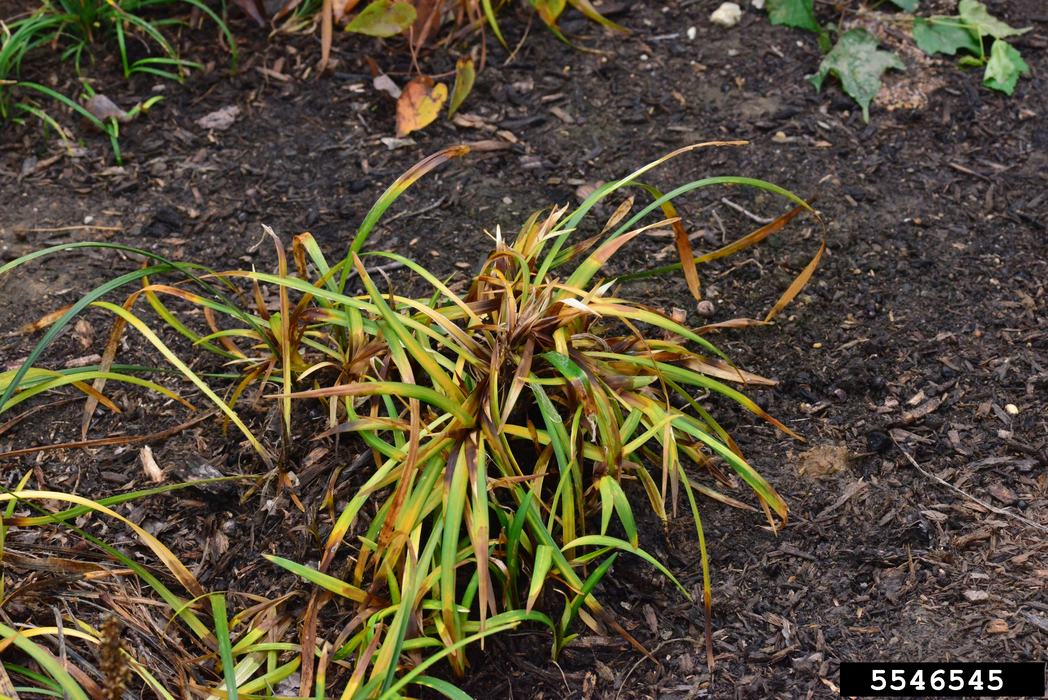
David L. Clement, University of Maryland, Bugwood.org CC BY-NC
Description of Symptoms
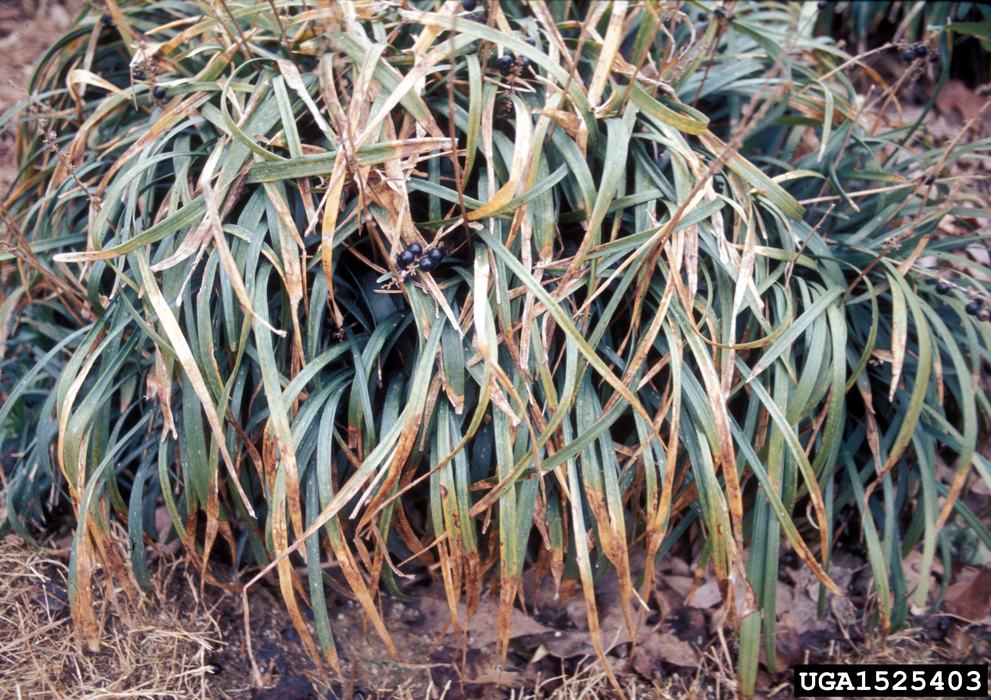
Reddish-brown speckles appear in patches on leaf margins and tips. There is frequently a yellow line between the brown and green parts of the leaf. Half circle patterns of damage can also appear on the sides of leaves.
Management Strategies
While there is no cure, the following management strategies reduce symptoms:- Select disease-resistant cultivars. Replace susceptible plants with tolerant ones.
- Keep foliage dry by avoiding overhead irrigation
- Increase air circulation to promote rapid leaf drying by thinning plants as needed.
- Remove and destroy diseased plant debris as symptoms develop, especially in the fall.
- Apply fungicides as needed to protect new growth. Check the fungicide label to be sure both host and pathogen are listed.
- Once plants are infected, fungicides will not cure the disease.
- Use a wetting agent (surfactant/adjuvant) so fungicide adheres to waxy foliage.
R.K. Jones, NC State University, Bugwood.org CC BY-NC 2.0
Sources and Additional Information
- Key Plant, Key Pests, Lilyturf (Liriope Muscari) (University of Florida)
- Managing Diseases of Herbaceous Ornamentals (See page 5) (University of Kentucky)
- Professional Disease Management Guide for Ornamental Plants (University of Florida)
- Liriope, plants.ces.ncsu.edu
Subscribe for Email Updates
Receive periodic email updates on topics you care about.
SUBSCRIBE
Written By

More About