Destructive Jumping Earthworms

(Updated: Oct. 14, 2026, 1:27 p.m.)
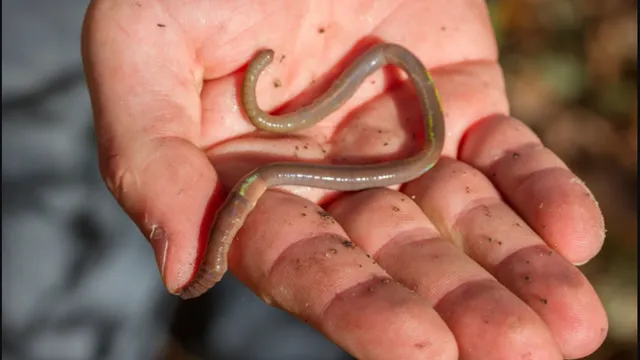
Adult jumping earthworm in a hand

Adult jumping worm with an creamy-white, iridescent saddle near the head. Image by Matt Bertone

Unlike many beneficial earthworms that burrow through the soil, jumping worms feed on or near the surface of the ground, consuming large quantities of leaf litter, disrupting natural ecosystems and home landscapes. In infested areas the soil is uniform and granular like coffee grounds. They can:

  • make the soil surface less favorable to normal soil microorganisms (fungi, bacteria), and plant growth.
  • increase the risk of nutrient runoff as their castings (feces) are left on the soil surface
  • impact water permeability causing soils to dry out more quickly and erode more readily
  • out compete other soil organisms for food (millipedes, springtails and other invertebrates) eliminating them as a food source for predators up the food chain
  • sequester toxic metals from the soil which then accumulate in predators who eat them.
  • eliminate habitat for salamanders, ground-nesting birds
  • diminish the growth of annuals, perennials, and turfgrass
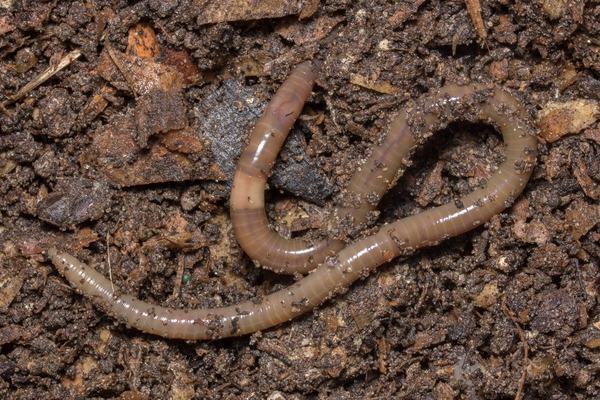
Typical jumping earthworm on top of the soil.

Typical adult jumping worm with creamy-white saddle flush with its body. Image by Matt Bertone

"Asian crazy / jumping" worms are native to East Asia and Australia but with the accidental help of humans are now found all over the world. They have been in the US since the 1800s.

Here are some key characteristics of jumping worms:

  • often brown in color and can reach 6 inches in length
  • mature jumping worms have a light, cream-colored "saddle" (sometimes iridescent) near the head region, flush with the rest of the body. It encircles the entire earthworm
  • a single band of short, stout hairs entirely surrounds most body segments; though you may need hand lens or microscope to see them
  • they jump and wiggle wildly when disturbed (video of jumping worm by the Oregon Department of Agriculture)

Jumping worms reproduce without mating and lay dozens of small round structures, about the size of a mustard seed, each containing many eggs. All of the jumping worms die in the winter but their eggs hatch out in the spring.

What can you do?

Prevention:

  • Avoid purchasing mulch and other ground cover that could be infested with jumping worms and their eggs. Instead purchase material that has been composted to at least 130°F for a minimum of three days.
  • Purchase bare root plants to avoid brining in contaminated soil or pests.
  • Inspect the soil of potted plants to be sure it is free of worms and earthworms.
  • Do not accept plants dug up from a neighbors yard.
  • Avoid purchasing jumping worms for fish bait; accidental releases can allow them to invade new areas
  • If jumping worms are present, clean soil from shoes, tools, vehicles, etc. that are being moved to another area.
  • Remember, if it has soil, it can have jumping worms

Management:

  • There are no chemicals available that will kill jumping worms but not also kill other earthworms.
  • Brad Herrick, an ecologist and researcher at the University of Wisconsin Arboretum, recommends making a mustard solution of one-third cup of dry mustard in one gallon of water and drenching the area. The solution will irritate the worms and bring them to the soil surface, where you can easily remove them by hand. Kill them by placing in a bucket of soapy water or rubbing alcohol, or in a bag in the freezer, or left out in the sun.
  • The cocoons are sensitive to heat and can be destroyed with clear plastic solarization. In late spring or summer, cover moistened soil with a sheet of transparent polyethylene for two to three weeks or until the soil temperature exceeds 104°F for at least three days.

More information