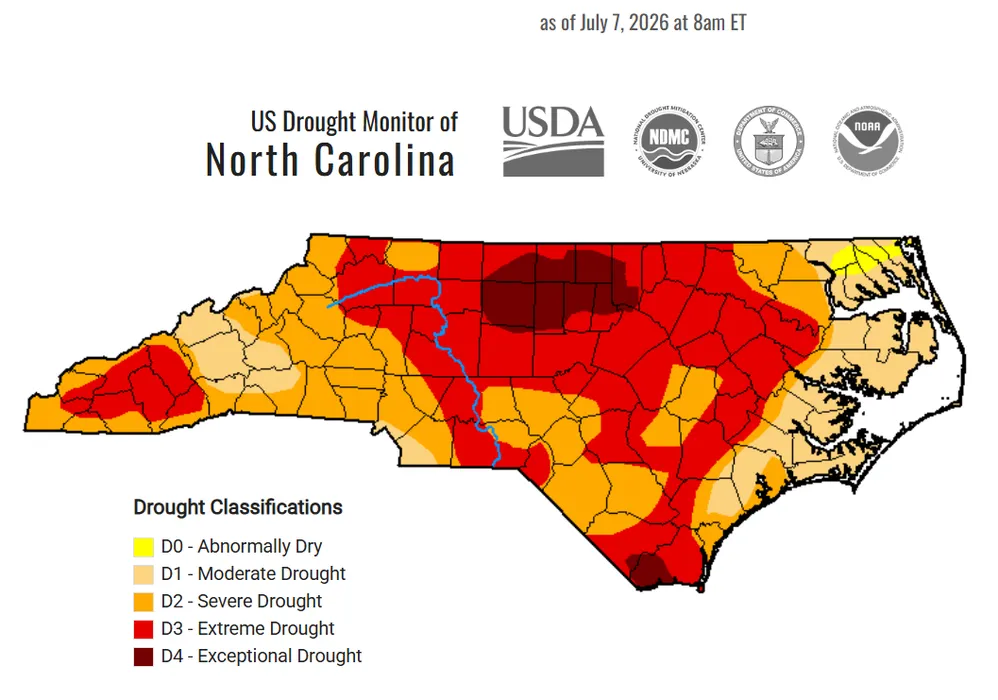
NC State Drought Map, Updated July 7, 2026, North Carolina Drought Management Advisory Council, https://www.ncdrought.org/
Key Points:
- Don't encourage growth: No new plants, no fertilizing, no pruning, except to remove dead or dying branches.
- Manage mulch: Ensure all vegetable, flower, and landscape beds have a 2"-3" layer of mulch.
- Remove weeds, annuals past their prime, and any plants with insect or disease problems.
- Allow your lawn to go dormant: It is much less stressful for the turf to remain dormant than it is to be repeatedly watered and drought-stressed.
- Water Fruits and Vegetables 1"/week to maintain production:
- Identify which ornamentals are a priority to water
- Water slowly to prevent runoff
- Harvest Rainwater in cisterns or rain barrels for use in the landscape.
- After the Drought
- Make notes: Record what dies, what survives, what steps were effective, and what didn't work.
- Consider transplanting plants into groups with similar water needs to make them easier to care for during the next drought.
- Plan for the next drought. Learn to conserve water both inside and out. Make your landscape more resilient to drought conditions. Water Use It Wisely
- Stay Informed.
- MORE INFORMATION on what to do before, during and after a drought